

How to Get Your Electrician License in Indianapolis, IN (2026 Guide)
Everything you need to know about licensing, exams, costs, and building a profitable electrical business in the Indianapolis metro area.

Indianapolis is one of the fastest-growing metros in the Midwest, and that growth is creating serious demand for licensed electricians. Between the downtown development boom, suburban expansion into Hamilton County, EV infrastructure buildouts, and a commercial sector anchored by companies like Eli Lilly and Salesforce, there has never been a better time to get licensed and start working in the Indy electrical market.
But here is the critical thing most people get wrong about Indiana: electrical licensing happens at the local level, not the state level. Indiana is one of the states where your city or county's Authority Having Jurisdiction (AHJ) controls licensing requirements, not a centralized state board. That means the process for Indianapolis and Marion County has its own specific rules, exams, and fees.
This guide walks you through every step, from apprenticeship to launching your own contracting business in the Circle City.
Indiana's Local Licensing System: What You Need to Know First

Unlike states such as Texas or Florida that issue a single statewide electrical license, Indiana delegates licensing authority to local jurisdictions. In Indianapolis, the licensing process is administered through the local Authority Having Jurisdiction, which works in conjunction with the Indianapolis Department of Business and Neighborhood Services (also known as the Department of Code Enforcement), located at 1200 Madison Ave, Suite 100, Indianapolis, IN 46225.
What this means for you practically:
- Your Indianapolis license is specific to Marion County. To work in other Indiana cities, you may need to apply for additional local licenses or verify reciprocity agreements.
- Exams are typically based on the National Electrical Code (NEC). Indiana has historically adopted the 2008 NEC at the state level but is currently transitioning to the 2023 NEC edition. Local jurisdictions may adopt newer editions independently, so confirm the current edition with the Indianapolis licensing office before exam prep.
- Continuing education requirements vary by jurisdiction. Always confirm current CE requirements with the local licensing office.
- Permit pulling is tied to your local license. You cannot pull electrical permits in Marion County without the appropriate local license or working under someone who holds one.
This local structure can actually work in your favor. Instead of competing with every licensed electrician in the entire state, your Marion County license gives you a defined home market where you build your reputation and client base.
Electrician License Tiers in Indianapolis
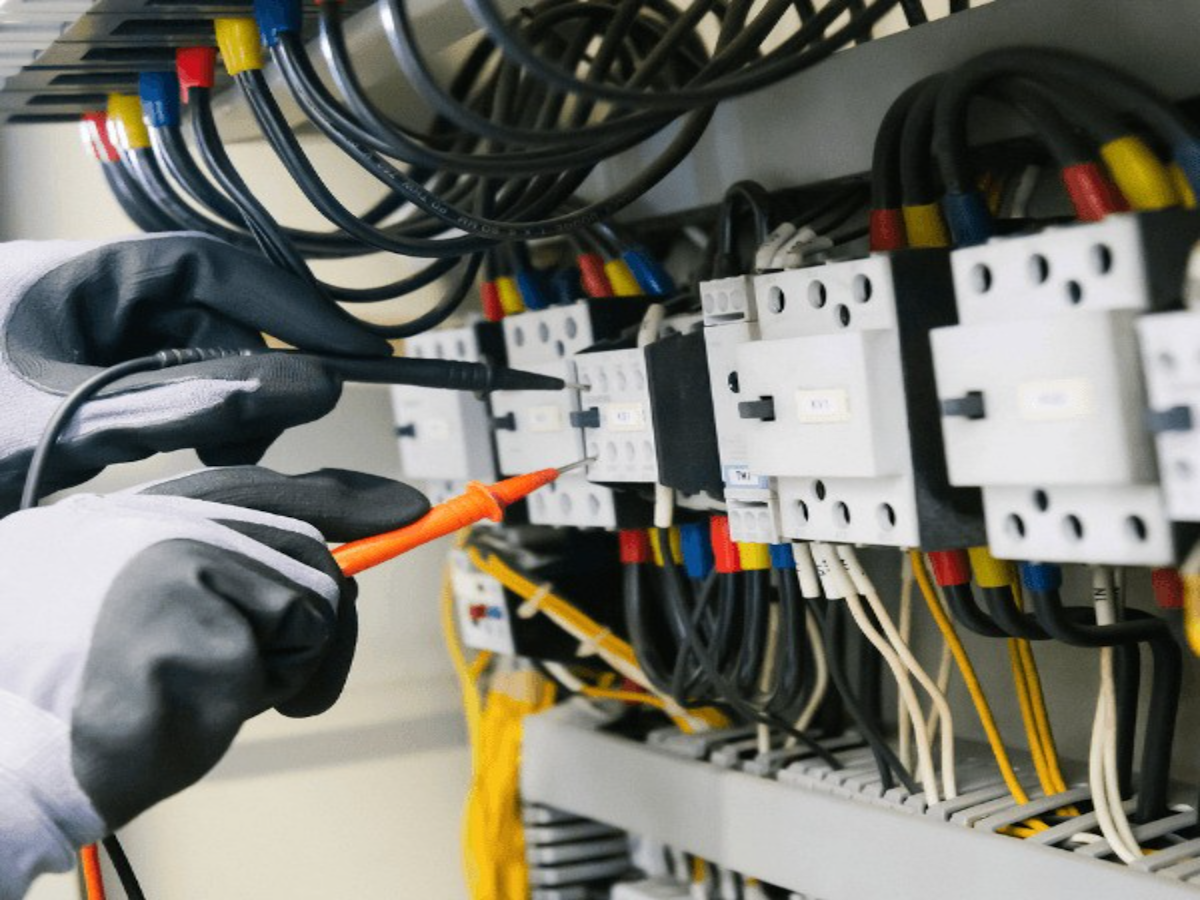
Indianapolis officially recognizes two electrician license types — Residential Electrician and Master (Unrestricted) Electrician — issued through the Department of Business and Neighborhood Services. However, the overall career progression from apprentice through contractor follows a four-stage path. Each stage builds on the previous one.
1. Apprentice Electrician
This is where everyone starts. As an apprentice, you work under the direct supervision of a licensed journeyman or master electrician.
- Requirements: Must be at least 18 years old with a high school diploma or GED
- Registration: Enroll in an approved apprenticeship program such as IBEW Local 481's Electrical Training Institute (ETI) or the Independent Electrical Contractors (IEC) of Indiana program. The IBEW program is a paid apprenticeship starting at approximately $16.30 per hour plus benefits, with no tuition cost to the apprentice.
- Duration: Typically 8,000 hours (approximately 4 years) of on-the-job training
- Education: Most apprentices complete classroom instruction through a union program (IBEW Local 481 in Indianapolis), a non-union apprenticeship, or an accredited trade school
- What you can do: Perform electrical work only under direct supervision; cannot pull permits independently
2. Residential Electrician (Journeyman Level)
In Indianapolis, the first license tier you can obtain is the Residential Electrician license, which functions as the journeyman-level credential.
- Requirements: A minimum of 6 years of documented electrical work experience. Up to 2 of those years may be substituted with relevant college courses, trade school, or apprenticeship classroom hours. You must also submit a notarized employer letter, three signed customer reference letters, and copies of your credentials.
- Exam: Must pass the Indianapolis Residential Electrician examination — an ICC-based, NEC-referenced exam with 80 to 100 multiple-choice questions. The exam takes 3 to 4 hours and requires a passing score of 75%.
- Interview: Applicants must also pass an interview with the licensing board before sitting for the exam.
- What you can do: Perform electrical work on one- and two-family residential buildings under the employment of a master electrician.
- Limitations: Cannot work on commercial projects independently or pull permits as a business owner.
3. Master Electrician
The master electrician license demonstrates advanced competency and is often required before you can obtain a contractor license.
- Requirements: At least 2 additional years of experience as a licensed residential or journeyman electrician beyond the initial licensing requirements. You must submit documentation of your experience and pass an interview.
- Exam: Must pass the Master Electrician examination with a score of 75% or higher. This exam covers complex code scenarios, system design, project management, and advanced NEC applications.
- What you can do: The Master (Unrestricted) license allows you to perform all types of electrical work — residential, commercial, and industrial. You can supervise multiple electricians and apprentices, and qualify to apply for a contractor license.
4. Electrical Contractor
This is the business license tier. It allows you to operate an electrical contracting company, pull permits, and bid on projects independently.
- Requirements: Must hold a master electrician license (or employ a qualifying master electrician), obtain proper insurance and bonding, register your business entity
- Insurance: General liability insurance is required with a minimum of $500,000 coverage for each occurrence of bodily injury or death, and $100,000 for each occurrence of property damage (or $500,000 combined). The policy must name the "Consolidated City of Indianapolis" as an additional insured. Workers' compensation is also required if you have any employees.
- Bonding: A $10,000 surety bond is required for Indianapolis electrical contractors. Bond premiums typically cost $100 – $300 per year depending on your credit. Bonds run on a two-year cycle, expiring on odd years.
- What you can do: Operate your own electrical business, pull permits, bid on residential, commercial, and municipal projects, hire and supervise electricians
Get the Complete Indianapolis Electrician Startup Guide
Our 2026 research guide covers every requirement for launching your electrical contracting business in Indianapolis — from local licensing steps and exam resources to insurance benchmarks, permit procedures, and marketing strategies specific to the Marion County market.
View the Indianapolis Electrician GuideLicensing Costs and Timeline
Planning your budget and timeline is essential. Here is a realistic breakdown of what to expect on the path from apprentice to licensed contractor in Indianapolis.
Estimated Costs
| Expense | Estimated Cost |
|---|---|
| Apprenticeship program (4 years, union or trade school) | $0 – $15,000 total (IBEW Local 481 union apprenticeship is free with paid wages; non-union and trade school programs vary) |
| Journeyman exam application fee | $75 – $125 (application fee plus exam fee; contact DBNS at 317-327-8700 for current amounts) |
| Journeyman license fee (annual) | $50 – $100 (renewed every 3 years in Indianapolis) |
| Master electrician exam fee | $75 – $200 |
| Contractor license and registration | $100 – $300 |
| General liability insurance (annual) | $700 – $3,500 (Indiana averages approximately $1,272/year for small operations with $1M/$2M coverage; larger firms with employees pay more) |
| Surety bond | $100 – $300/year (for a $10,000 bond; premiums are typically 1% – 3% of bond amount) |
| NEC codebook (current edition) | $100 – $175 |
| Exam prep courses (optional) | $200 – $600 |
| Tools and initial equipment | $2,000 – $5,000 |
Realistic Timeline
| Milestone | Timeframe |
|---|---|
| Complete apprenticeship (8,000 hours) | 4 years |
| Pass journeyman exam and receive license | 1 – 3 months after completing hours |
| Gain additional experience as journeyman | 2+ years (typical before master exam) |
| Pass master electrician exam | 1 – 3 months |
| Set up business, insurance, bonding | 1 – 2 months |
| Total: Apprentice to contractor | 6 – 8 years |
If you are coming from another state with an existing journeyman or master license, the timeline can be significantly shorter. Check with the Indianapolis AHJ about reciprocity and experience credit.
The Exam: What to Expect and How to Prepare
The journeyman and master electrician exams in Indianapolis are code-based examinations built primarily around the National Electrical Code (NEC). Here is what you should know going in.
Exam Format
- Type: Multiple choice, open-book (NEC codebook allowed)
- Duration: 3 – 4 hours for the residential exam (80 – 100 questions)
- Passing score: 75% or higher
- Topics covered: NEC code articles, electrical theory, load calculations, grounding and bonding, overcurrent protection, wiring methods, box fill calculations, motor circuits, and safety regulations
Preparation Strategies That Work
- Know your NEC codebook inside and out. The exam is open-book, but if you cannot find answers quickly, you will run out of time. Tab your codebook extensively — articles 210, 220, 230, 250, 300, and 430 are heavily tested.
- Take a formal exam prep course. Organizations like Mike Holt Enterprises and Jade Learning offer NEC-based exam prep that maps closely to what you will see on test day.
- Practice timed tests. Simulating real exam conditions helps more than passive studying. Aim to answer each question in under 3 minutes.
- Focus on calculations. Load calculations, voltage drop, conduit fill, and box fill questions are where most people lose points. Drill these until they are second nature.
- Study with other apprentices or journeymen. IBEW Local 481 and local trade schools sometimes offer study groups.
Indiana Reciprocity Considerations
Because Indiana uses local licensing rather than a statewide system, reciprocity works differently here than in most states.
- Within Indiana: Some Indiana cities and counties have informal reciprocity agreements or streamlined application processes for electricians already licensed in another Indiana jurisdiction. However, this is not guaranteed. Always contact the specific AHJ where you want to work.
- From other states: If you hold an active license from another state, Indianapolis may grant credit for your experience hours and potentially waive certain requirements. You will likely still need to pass the local exam. Bring documented proof of your out-of-state experience and license history.
- Working in surrounding counties: Hamilton County (Carmel, Fishers, Noblesville), Hendricks County (Plainfield, Brownsburg), and Johnson County (Greenwood) each have their own licensing requirements. If you plan to work across the metro, budget time to get licensed in multiple jurisdictions.
Insurance and Bonding in Marion County
Before you can operate as an electrical contractor in Indianapolis, you need proper coverage in place.
- General liability insurance: Protects against property damage and bodily injury claims. Marion County requires a minimum of $500,000 per occurrence for bodily injury and $100,000 per occurrence for property damage (or $500,000 combined). The policy must name the Consolidated City of Indianapolis as an additional insured. Many commercial clients and GCs will require higher limits of $1 million or more.
- Workers' compensation: Required by Indiana law as soon as you have one employee — no exceptions and no minimum employee threshold. Coverage must begin on the employee's first day. Failure to carry workers' comp can result in fines up to $10,000 per violation plus $50 per day per uncovered employee. Even sole proprietors should consider it for personal protection.
- Commercial auto insurance: Required if you use vehicles for business purposes. Your personal auto policy will not cover work-related incidents.
- Surety bond: Marion County requires a $10,000 surety bond for electrical contractors. Bonds run on a two-year cycle and typically cost $100 – $300 per year in premiums.
- Inland marine / tools coverage: Not required, but strongly recommended. Covers your tools and equipment against theft and damage — a real concern when working job sites across the metro.
Get quotes from at least three insurance providers. Companies that specialize in contractor insurance (such as Next Insurance, Thimble, or local Indiana agencies) often offer better rates than general insurers because they understand trade-specific risk profiles.
Free Electrician Startup Checklist
Not sure where to start? Download our free checklist that breaks down every step from apprenticeship through business launch — including the licensing, insurance, and equipment benchmarks specific to getting started in the electrical trade.
Download the Free ChecklistBest Areas for Electrical Work in Indianapolis

Not all parts of the Indy metro offer equal opportunity. Here is where the work is concentrated and where smart electricians are positioning themselves.
Downtown Indianapolis
The downtown core continues its transformation with new apartment complexes, mixed-use developments, hotel renovations, and office-to-residential conversions. The area around Mass Ave, Fletcher Place, and the Bottleworks District is generating consistent commercial electrical work. High-rise residential and hospitality projects require advanced electrical systems, fire alarm integration, and backup power — all higher-margin work.
Carmel and the Hamilton County Corridor
Carmel has been one of the fastest-growing cities in the United States for over a decade. New subdivisions, commercial developments along US-31, and the continued buildout of the Carmel Arts and Design District mean constant demand for both residential and commercial electricians. Fishers and Noblesville are following the same trajectory, with new neighborhoods, retail centers, and school construction keeping crews busy year-round.
Speedway and the IMS Area
The Indianapolis Motor Speedway and its surrounding entertainment district create a unique niche. Race events, concerts at the venue, and the Speedway town redevelopment all require temporary and permanent electrical installations. If you can build relationships with event production companies and the facilities management teams in this area, you will have access to recurring specialty work.
Corporate and Industrial Campuses
Eli Lilly's massive campus expansion, the Salesforce Tower and surrounding office district, the growing tech corridor along the 16 Tech Innovation District, and logistics operations near the Indianapolis International Airport all represent large-scale commercial and industrial electrical opportunities. These projects typically require electricians with commercial experience and often pay premium rates.
Greenwood and the Southside
Greenwood and the southern Marion County suburbs are experiencing a residential construction wave. New subdivisions, along with retail and restaurant buildouts along State Road 135 and I-65, keep residential and light commercial electricians busy.
Seasonal Demand Calendar for Indianapolis Electricians

Understanding seasonal patterns helps you plan your workload, marketing, and cash flow throughout the year.
| Season | Months | Primary Demand Drivers |
|---|---|---|
| Winter | Dec – Feb | Heating system electrical repairs, furnace wiring, backup generator installations, panel upgrades for space heaters, indoor remodeling projects. Indiana winters are harsh — when heating systems fail, electrical calls spike. |
| Spring | Mar – May | New construction ramps up, outdoor electrical work begins, storm damage repairs (Indiana's severe storm season), landscape lighting installations, pool and patio wiring, pre-summer AC system prep. |
| Summer | Jun – Aug | Peak construction season, IMS racing events, commercial buildouts push to completion, AC-related panel upgrades, EV charger installations, outdoor entertainment wiring. This is your highest-revenue quarter. |
| Fall | Sep – Nov | Pre-winter generator installations, holiday lighting contracts (commercial and residential), heating system pre-season inspections, final push on construction projects before weather turns, whole-home surge protection installs. |
Pro tip: The smartest electricians in Indianapolis market their seasonal services 6 – 8 weeks ahead of demand. Start promoting generator installations in September, not December. Start advertising outdoor and pool electrical work in February, not May. Lead the cycle instead of chasing it.
High-Growth Niches in the Indianapolis Market
General residential and commercial electrical work will always be the backbone of most businesses. But the electricians earning the highest margins in Indianapolis right now are specializing in these growing niches.
EV Charging Station Installation
Indianapolis is a major logistics and transportation hub. With Indiana's growing EV adoption, both residential and commercial EV charger installations are surging. Apartment complexes, corporate parking lots, and fleet operators all need Level 2 and DC fast charging infrastructure. Getting certified as a Tesla, ChargePoint, or general EVSE installer positions you for contracts that most residential-focused electricians cannot compete for.
Backup Generator Systems
Indiana's severe weather — ice storms, tornadoes, and summer thunderstorms — makes whole-home and commercial backup generators a consistent seller. Generac, Kohler, and Briggs and Stratton all have authorized installer programs. Becoming a certified installer for one or more brands gives you access to manufacturer leads and warranty work.
Smart Home and Building Automation
The new construction market in Carmel, Fishers, and downtown Indy lofts increasingly includes smart home pre-wiring, automated lighting systems, and integrated security. Electricians who understand low-voltage integration alongside standard power systems can command premium rates on these projects.
Solar and Battery Storage
While Indiana's solar incentive landscape is not as aggressive as some states, the federal Investment Tax Credit and declining equipment costs are driving residential and commercial solar adoption in the metro area. Electricians who add NABCEP certification can tap into this growing segment.
Growing Your Electrical Business in Indianapolis

Getting licensed is step one. Building a sustainable, profitable business is the long game. Here is how successful electrical contractors in the Indianapolis market are growing.
Build Your Reputation Before You Need It
Start building your Google Business Profile, collecting reviews, and establishing your online presence while you are still working as a journeyman. By the time you launch your contracting business, you want existing credibility. Indianapolis is a relationship-driven market — word of mouth and online reviews are the two most powerful lead generators for local trades.
Target the Right Customer Segments
Not all electrical work pays equally. Map out your ideal mix:
- Residential service calls: Highest volume, lowest average ticket, but great for cash flow and reviews
- Residential new construction: Consistent work through builder relationships, moderate margin
- Commercial tenant buildouts: Higher margin, requires commercial experience and proper insurance limits
- Commercial new construction: Largest projects, but payment cycles are longer and bonding requirements are higher
- Specialty niches: EV chargers, generators, smart home — highest margin per job, lower volume
Strategic Partnerships
The fastest-growing electrical contractors in Indy are not just waiting for the phone to ring. They are building partnerships with:
- General contractors working the Hamilton County residential boom
- HVAC companies who need electrical subcontractors for system installations
- Property management companies overseeing downtown apartment complexes
- Real estate agents who recommend electricians for pre-sale inspections and upgrades
- Home builders in the Fishers, Noblesville, and Westfield new-development corridors
Pricing for Profit, Not Just Revenue
Many new contractors underprice their work trying to win jobs. Calculate your true costs — labor, materials, insurance, vehicle expenses, licensing fees, taxes, and overhead — before setting your rates. In the Indianapolis market, residential electricians typically charge customers $50 to $100 per hour, while commercial electricians charge $90 to $145 per hour. Emergency and after-hours calls can run $200 or more. Do not compete on price alone. Compete on responsiveness, quality, and professionalism.
Invest in Your Online Presence
The top-performing electrical contractors in Indianapolis share a few common traits online:
- Fully optimized Google Business Profile with consistent posting and review responses
- A professional website with clear service descriptions, service areas, and contact information
- Active presence on Nextdoor (huge in Indy suburbs like Carmel and Fishers)
- Before-and-after project photos on social media showing local work
- Listed on HomeAdvisor, Angi, and Thumbtack with complete profiles
Save With the Electrician Premium Bundle
Get the Indianapolis Electrician Startup Guide plus our full suite of electrician business resources — including marketing templates, pricing calculators, and client management tools — at a bundled discount.
View the Electrician Premium BundleFrequently Asked Questions
Does Indiana have a statewide electrician license?
No. Indiana handles electrical licensing at the local level through each city or county's Authority Having Jurisdiction (AHJ). This means you need to get licensed specifically in Indianapolis/Marion County to work there. If you want to work in surrounding areas like Carmel, Fishers, or Greenwood, you may need additional local licenses. Always check with the specific jurisdiction before starting work.
How long does it take to become a licensed electrician in Indianapolis?
The standard path from apprentice to journeyman takes approximately 4 years (8,000 hours of supervised work). Advancing from journeyman to master typically requires an additional 2 or more years of experience. If you pursue a contractor license after that, add another 1 – 2 months for business setup, insurance, and bonding. Total timeline from start to running your own contracting business: approximately 6 – 8 years.
Can I transfer my electrician license from another state to Indianapolis?
Indiana does not have automatic reciprocity with other states because licensing is handled locally. However, Indianapolis may give credit for your documented out-of-state experience and could have a streamlined process for experienced electricians. You will likely still need to pass the local examination. Contact the Indianapolis Department of Business and Neighborhood Services at (317) 327-8700 or Contractors@indy.gov with your credentials to find out exactly what will be required.
How much do electricians earn in Indianapolis?
Earnings vary significantly by license level, specialization, and whether you work as an employee or run your own business. As general benchmarks for the Indianapolis metro: apprentice electricians typically earn $16 – $22 per hour, journeymen earn $25 – $38 per hour (with the Indianapolis metro average around $29 per hour), and master electricians and business owners can earn $65,000 – $100,000+ annually depending on their book of business and specialization. Specialty niches like EV charging and commercial industrial work tend to command the highest rates.
What is the best way to prepare for the Indianapolis electrician exam?
The exam is open-book and NEC-based, so your two highest priorities are: (1) knowing the NEC codebook well enough to find any answer within 2 – 3 minutes, and (2) being confident with electrical calculations — load calculations, voltage drop, conduit fill, and box fill. Invest in a quality exam prep course from a provider like Mike Holt or Jade Learning. Tab your codebook thoroughly. Practice with timed mock exams. If possible, connect with IBEW Local 481 or a local trade school for study group opportunities.
Next Steps
Getting your electrician license in Indianapolis is a real commitment — but the market conditions in 2026 make it worth the effort. Downtown development, suburban expansion, EV infrastructure, and Indiana's ongoing demand for skilled trades mean that licensed electricians who are serious about building a business have a clear path to six-figure earnings.
Here is what to do right now:
- If you are starting out: Research apprenticeship programs. Look into IBEW Local 481's Electrical Training Institute (a 5-year paid apprenticeship that includes an Associate's degree from Ivy Tech at no cost), Ivy Tech Community College's Electrical Engineering Technology program on the Indianapolis campus, the Independent Electrical Contractors (IEC) of Indiana apprenticeship, and non-union apprenticeships in the Indianapolis area.
- If you are ready to test: Contact the Indianapolis Department of Business and Neighborhood Services at (317) 327-8700 or Contractors@indy.gov (1200 Madison Ave, Suite 100, Indianapolis, IN 46225) to confirm exam requirements, scheduling, and fees. Start your exam prep at least 8 – 12 weeks before your test date.
- If you are ready to launch your business: Get your insurance quotes, file your business entity with the Indiana Secretary of State, set up your Google Business Profile, and build your first set of partnerships with GCs and property managers.
Whatever stage you are at, having a clear, step-by-step plan makes the difference between electricians who get licensed quickly and those who stall out. Our Indianapolis Electrician Startup Guide was built specifically to give you that plan — every requirement, every form, every local resource you need, organized into a system you can follow from where you are right now to pulling your first permit as a licensed contractor.
Start with the free checklist if you want to see what the full process looks like before committing.